What Has to Be on a Food Package: Required Label Elements
The label elements FDA requires on packaged food, which panel each one goes on, and a front-and-back layout for a bag of cookies.


KitchenSync is nutrition label and recipe costing software for sauce and condiment makers. Enter the recipe in cups or gallons, set the yield after cooking, and get the Nutrition Facts label and batch cost for what goes in the bottle.
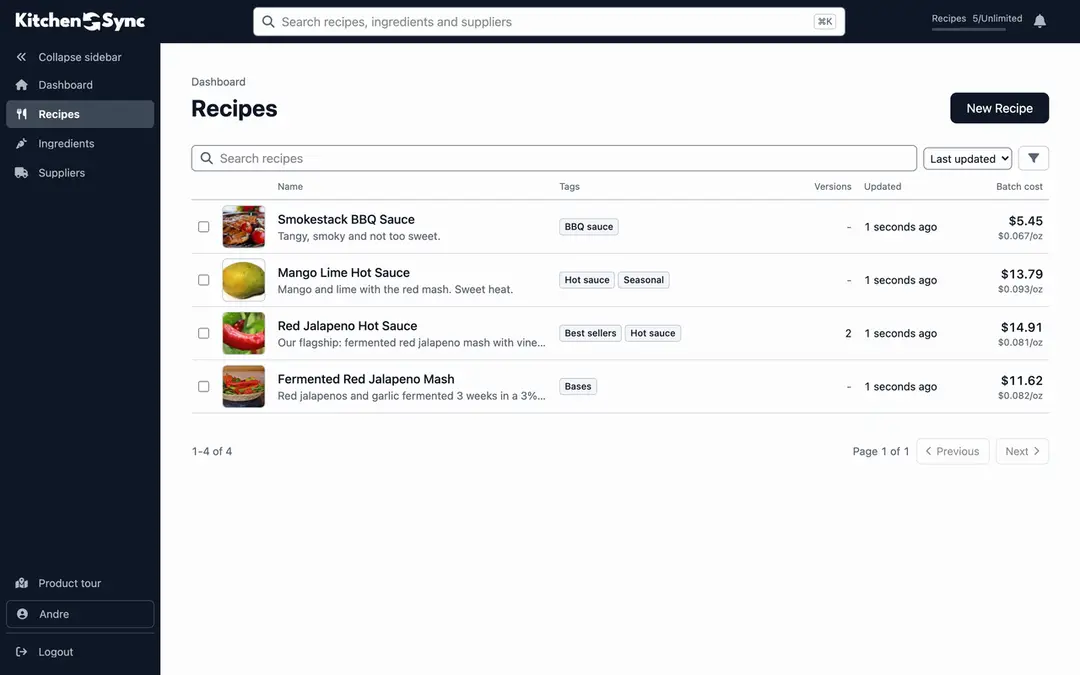
Reduction
A sauce that simmers for an hour loses water, so each tablespoon holds more sodium and sugar than the raw recipe suggests, and costs more. Pick the cooking method and the yield calculator estimates the finished weight from moisture loss. If you weigh the kettle after cooking, enter that weight instead. Recipe costing explains how yield changes the unit cost.
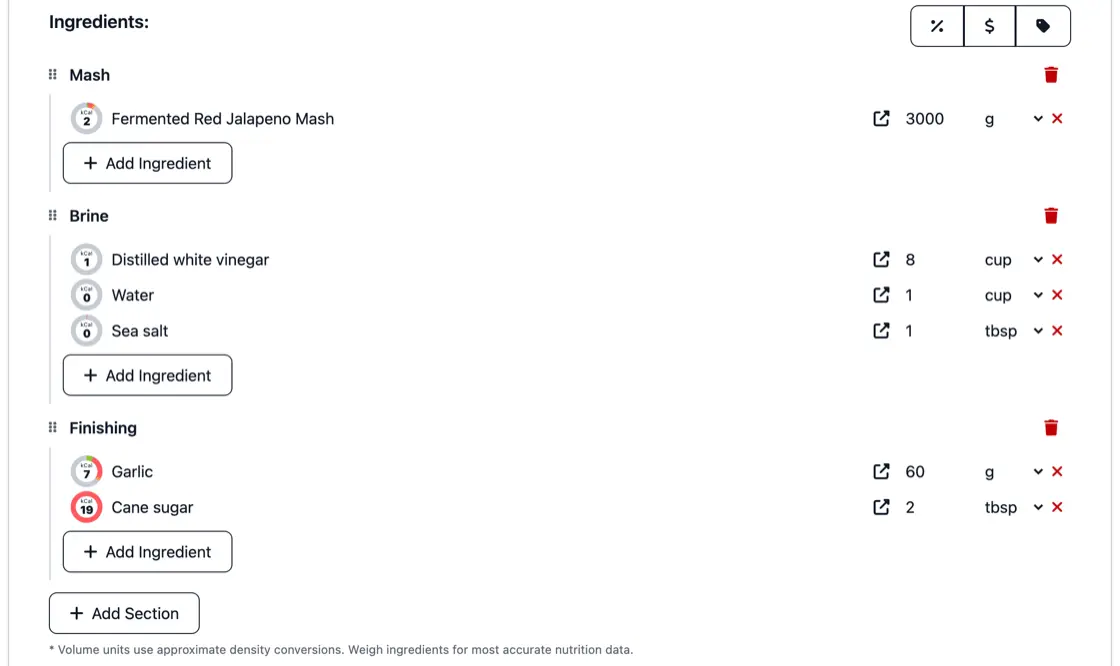
Units
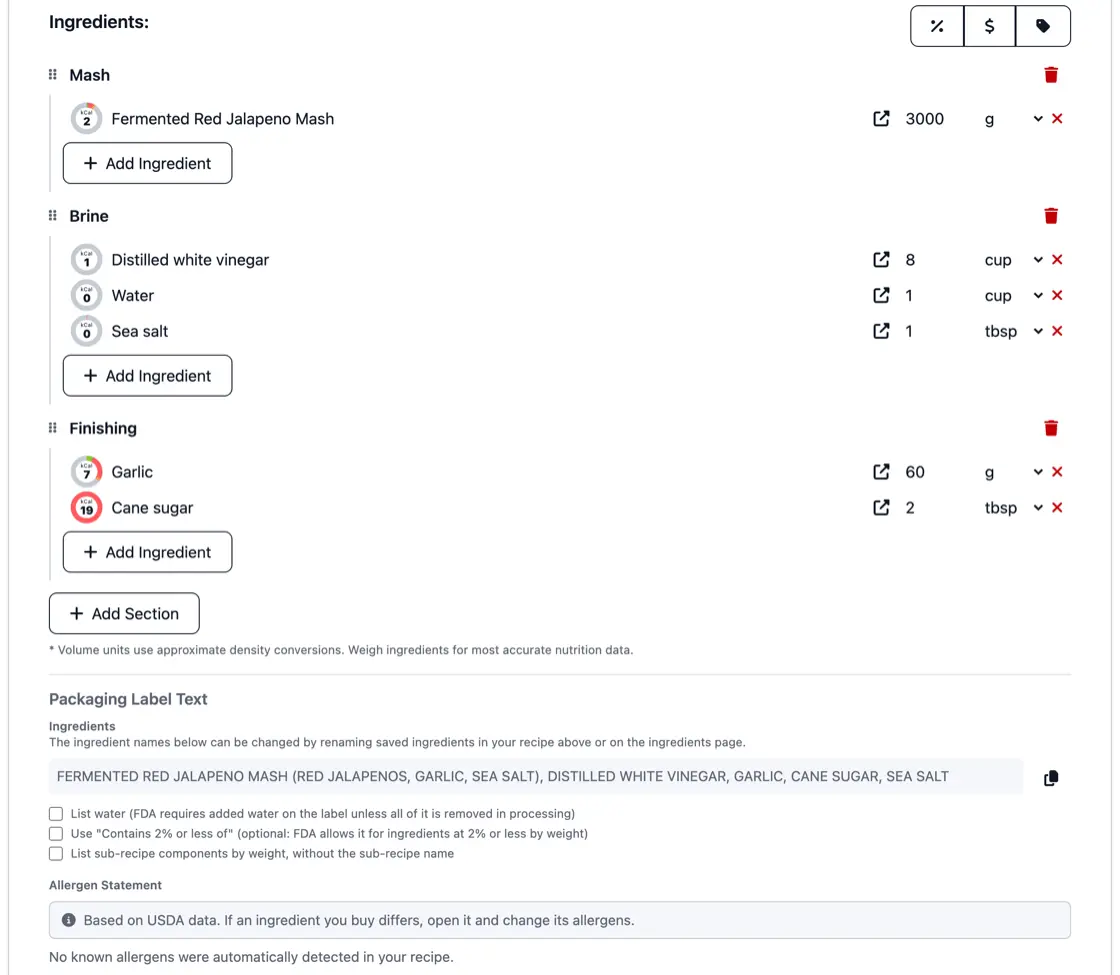
Sauce recipes are written in gallons, cups and tablespoons. Enter a gallon of crushed tomatoes, two cups of vinegar and a tablespoon of salt, and KitchenSync converts each amount to weight for the nutrition and cost calculations. Group the mash, the brine and the finishing spices into named sections so the recipe reads in the order you cook it. See recipe management.
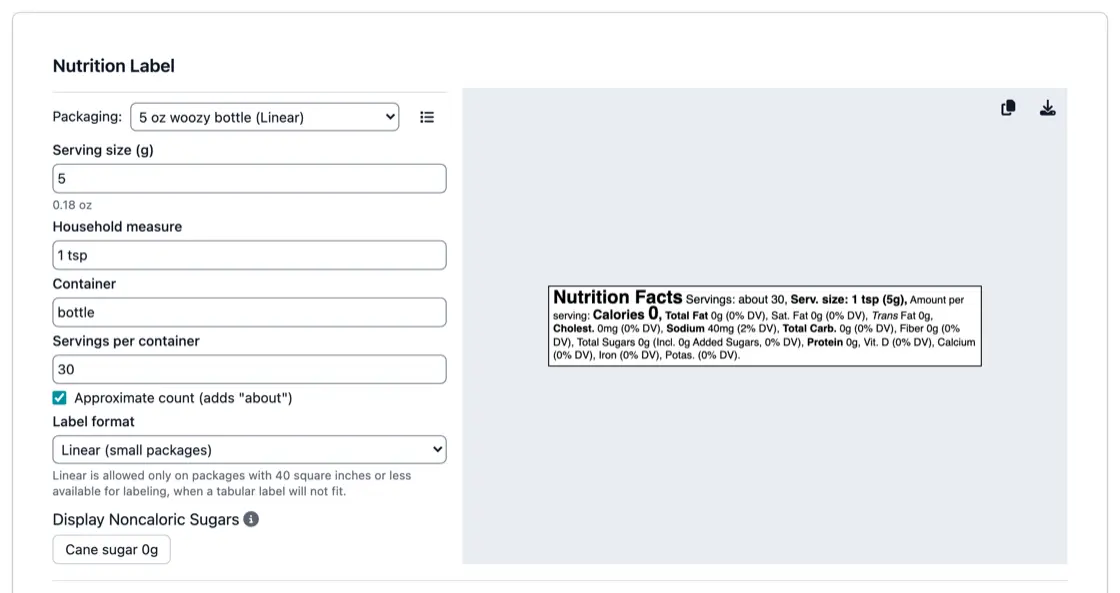
Label format
A slim hot sauce bottle has little room for a standard panel. The FDA allows a linear Nutrition Facts format on small packages, and KitchenSync offers it next to the vertical and dual column formats. Save each bottle and jar as a packaging format and pick the label format that fits. FDA rules on label space decide which packages qualify, so confirm yours before you print. See the nutrition label generator.
Suppliers
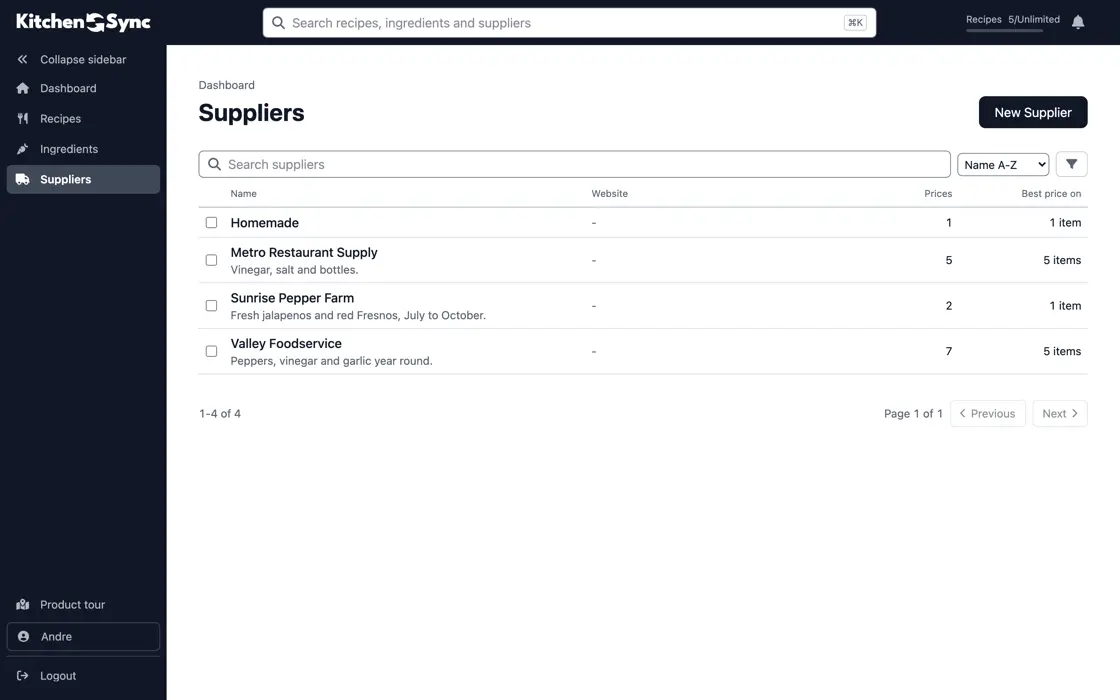
Peppers come from a farm in season and a distributor the rest of the year. Record each supplier's price on the ingredient and KitchenSync costs the batch with the lowest unit price. The Suppliers page lists what each one charges you. See ingredient pricing.
Product line
If a fermented mash or a spice blend goes into the whole line, make it a recipe and use it as an ingredient in each sauce. Change the mash and every sauce made from it picks up the new nutrition and cost. See recipes inside recipes.
The label elements FDA requires on packaged food, which panel each one goes on, and a front-and-back layout for a bag of cookies.
Find your product's FDA reference amount, turn it into a cup, spoon or piece, and count servings, with cookie, granola and hot sauce examples.
What federal traceability rules require of food producers, where the FSMA 204 rule stands, and a simple lot code scheme with a worked batch record.
Yes. Teaspoons, tablespoons, cups, pints, quarts and gallons work alongside weight units. KitchenSync converts volume to weight before it calculates nutrition and cost.
Choose the cooking method and the yield calculator estimates the cooked yield from moisture loss. Or weigh a finished batch and enter that weight as the yield.
FDA rules require Nutrition Facts on most packaged foods. Some makers qualify for the FDA's small business exemption, which a nutrient content claim such as "low sodium" generally removes. Check your own case with the FDA or your state agency. KitchenSync makes the label when you need one.
Enter the recipe by volume, set the cooked yield and export the label. Start free.
Sign Up Free →Need more recipes? See KitchenSync plans and pricing