How to Price Baked Goods From Your Real Cost per Unit
Build cost per unit from price per gram, real yield, packaging, labor and overhead, then set retail and wholesale prices. One batch worked through.

Coffee shops and cafes sell house-made pastries from the case and packaged grab-and-go items from the cooler. KitchenSync is nutrition label and recipe costing software for food businesses: each recipe gives you the ingredient list, allergen statement, Nutrition Facts label and batch cost.
Grab-and-go
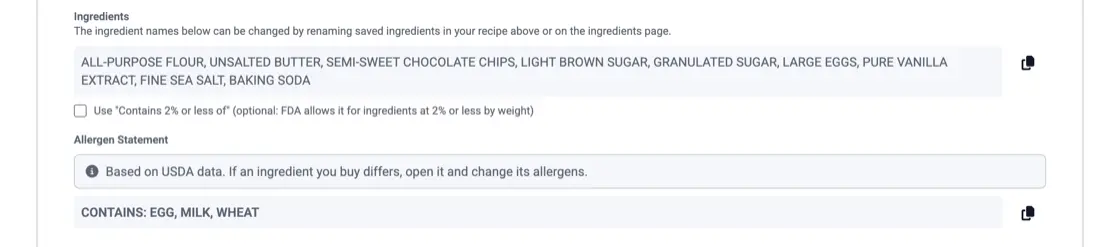
A wrapped sandwich, a parfait cup or a boxed cookie is packaged food, and packaged food generally carries an ingredient list and an allergen declaration. KitchenSync writes the ingredient list in descending order by weight, with the components of a house-made spread or filling in parentheses, and a copy button puts it into your label design. Requirements differ by state and county, so confirm yours. See the ingredient list generator.
Allergens
Milk, wheat, eggs and tree nuts are in most of what a cafe bakes. KitchenSync detects the FDA's nine major allergens from USDA ingredient descriptions and writes Contains and May contain lines you can copy onto a case tag or a package. If your almond flour or chocolate differs from the USDA entry, edit that ingredient and every recipe that uses it is corrected. See allergen detection.
Nutrition Facts
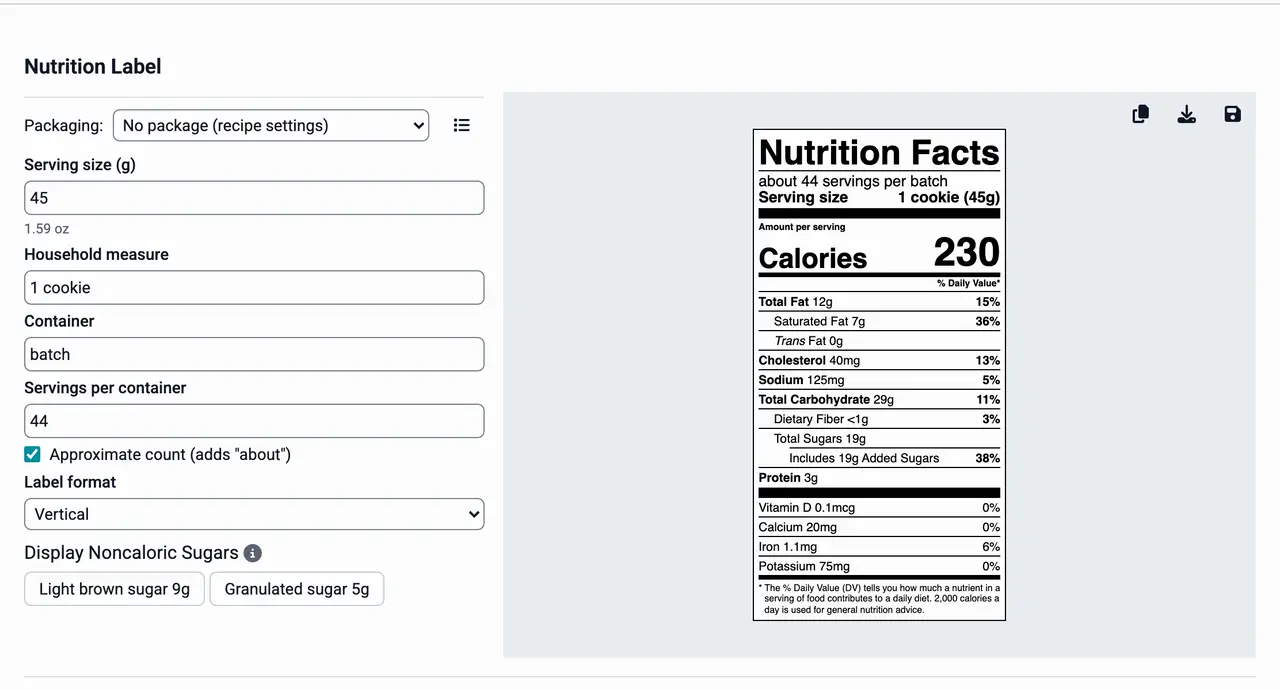
Many items made and sold in your own shop do not need a Nutrition Facts panel. A wholesale account, a grocery shelf or a claim such as "high protein" can change that. KitchenSync builds the label from the recipe in the FDA format, including the linear format for small packages. Save each cup, clamshell or bag as a packaging format and reuse it across recipes. See the nutrition label generator.
House-made bases
Vanilla syrup, scone dough, frangipane and chicken salad each go into several products. Save each as a recipe and add it as an ingredient to the latte, the scones, the croissant or the sandwich. Enter liquids by volume if that is how you measure them. See recipes inside recipes.
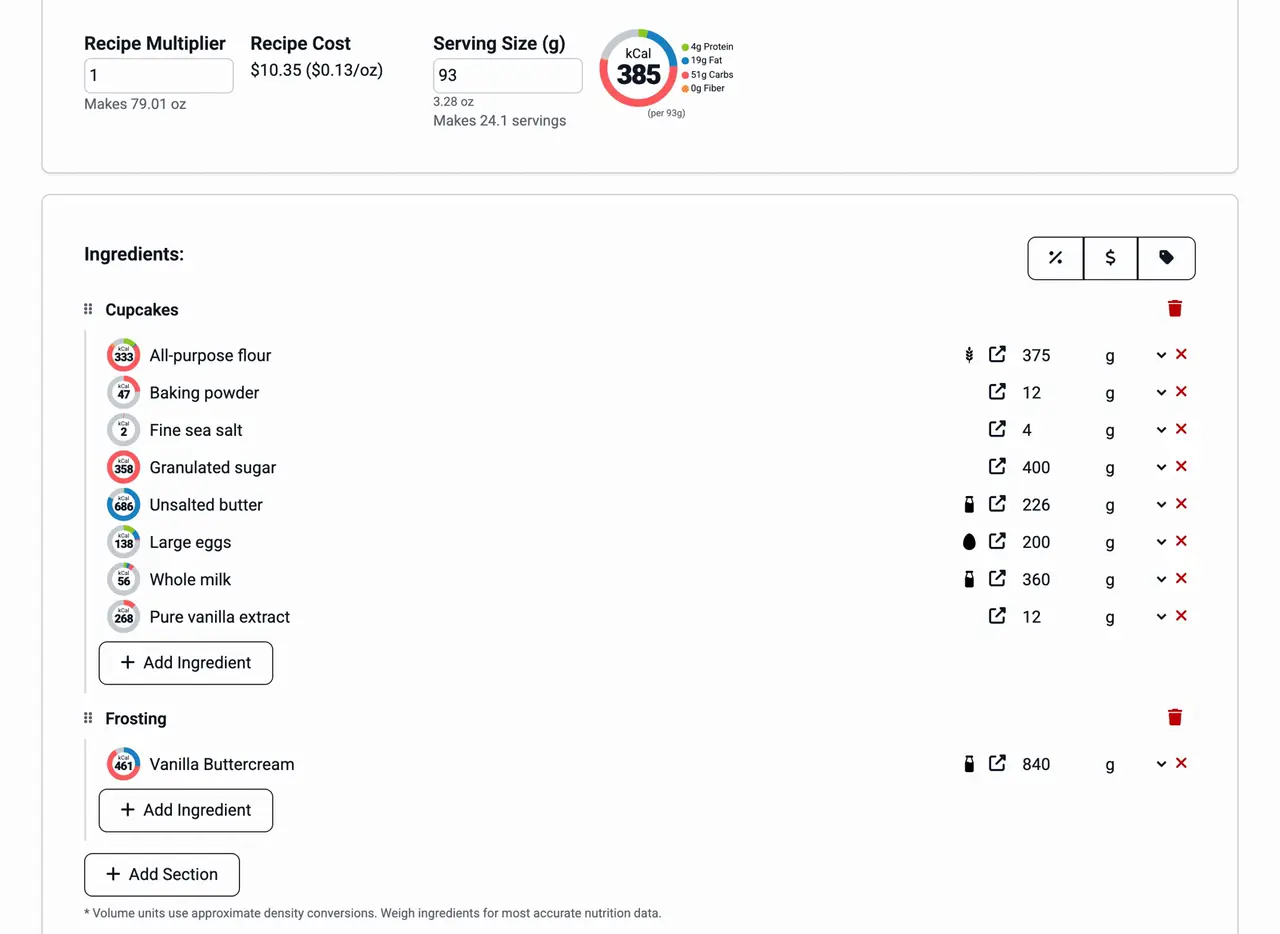
Costing
Each recipe shows its batch cost and its cost per ounce or gram from the prices you pay for butter, flour, milk and chocolate. Put that next to the wholesale price of the same pastry and you can see which items are worth baking yourself. When dairy prices change, enter the new price and the costs follow. See recipe costing.
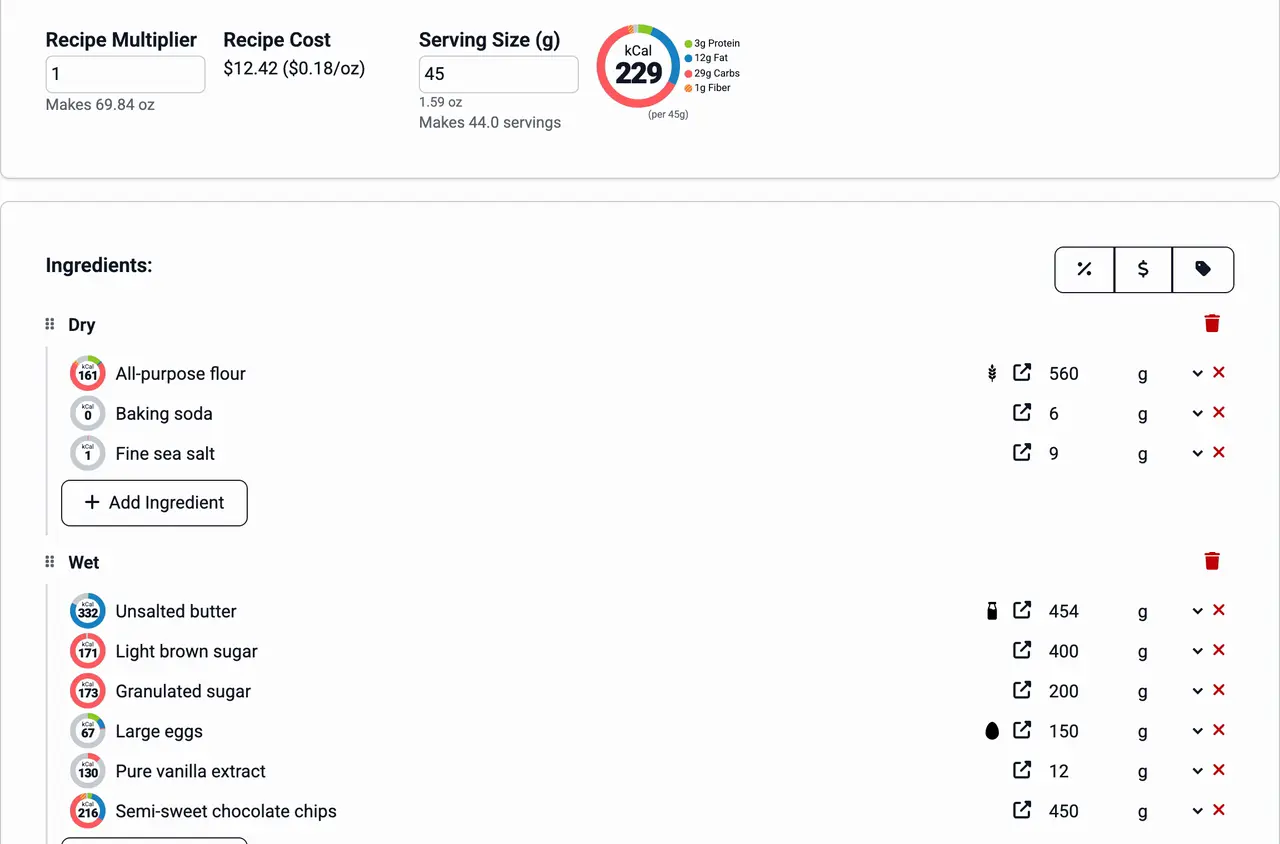
Build cost per unit from price per gram, real yield, packaging, labor and overhead, then set retail and wholesale prices. One batch worked through.
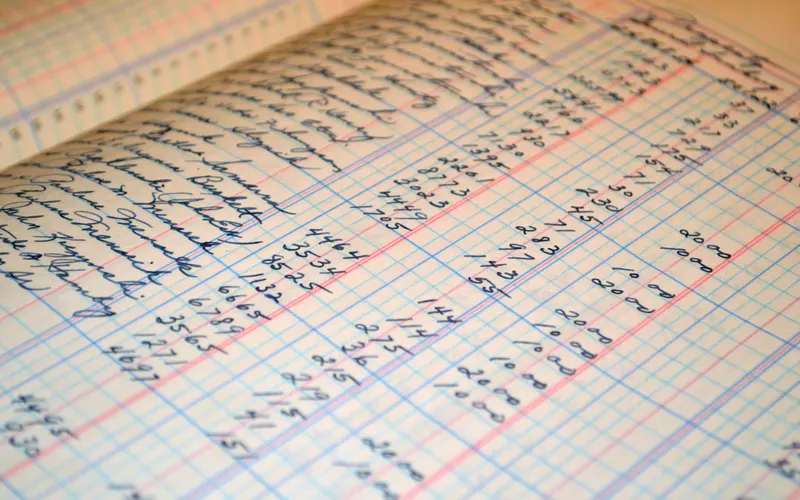
Log each purchase, compare suppliers by price per gram, review on a schedule, and decide when to reprice, reformulate or change pack size.
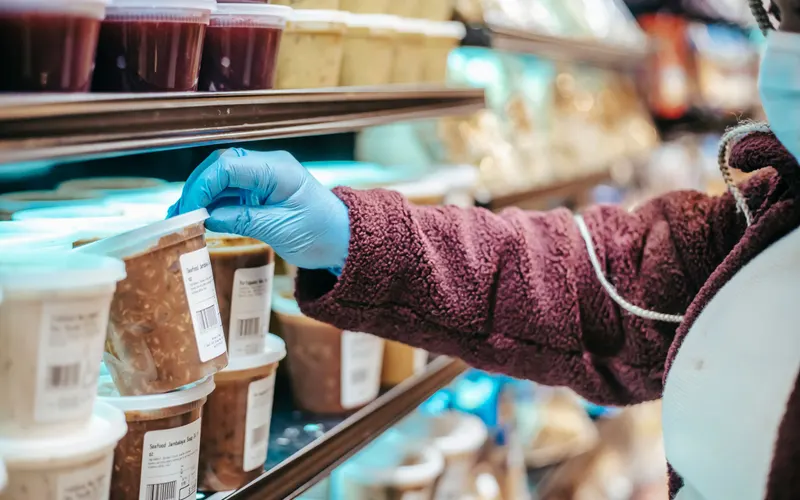
Who must put a Nutrition Facts panel on food and who is exempt under FDA rules, how cottage food laws fit in, and why wholesale buyers may ask anyway.
Often not. Pastries made and sold in your own shop are commonly exempt from the Nutrition Facts panel, and federal menu labeling applies to chains with 20 or more locations. Selling wholesale or making a nutrition claim can change that. Ask your health department what applies to you.
Generally the product name, an ingredient list in descending order by weight, the major allergens, the net quantity and your business name and address. KitchenSync produces the ingredient list, the allergen statement and the Nutrition Facts label; you place them in your label design with the rest.
Yes. Enter the syrup as a recipe, in cups, fluid ounces or milliliters if you prefer. KitchenSync converts volume to weight to cost it, and when you add the syrup to another recipe its cost carries in.
Enter each pastry and grab-and-go item once. Copy its ingredient list and allergen statement. Start free.
Sign Up Free →Need more recipes? See KitchenSync plans and pricing