What Has to Be on a Food Package: Required Label Elements
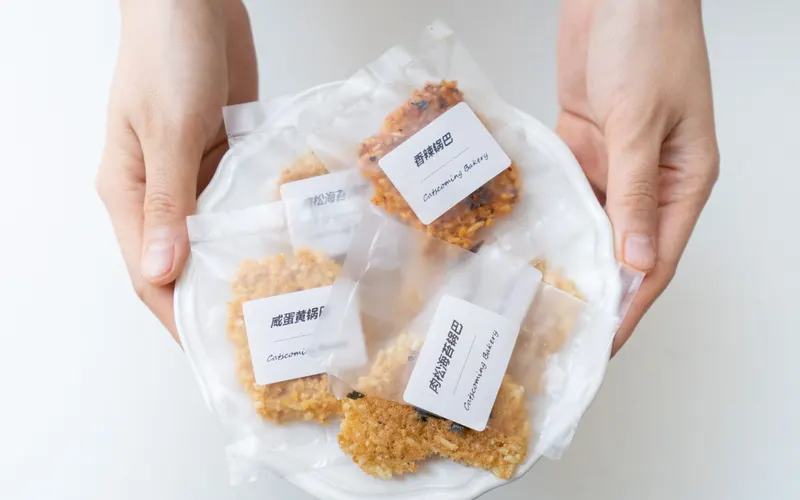
The label elements FDA requires on packaged food, which panel each one goes on, and a front-and-back layout for a bag of cookies.


KitchenSync is recipe costing and nutrition label software for spice blend, rub and seasoning makers. Enter each blend by weight and get its ingredient list in the right order, its allergen statement, its cost per ounce and a Nutrition Facts label.
Ingredient list
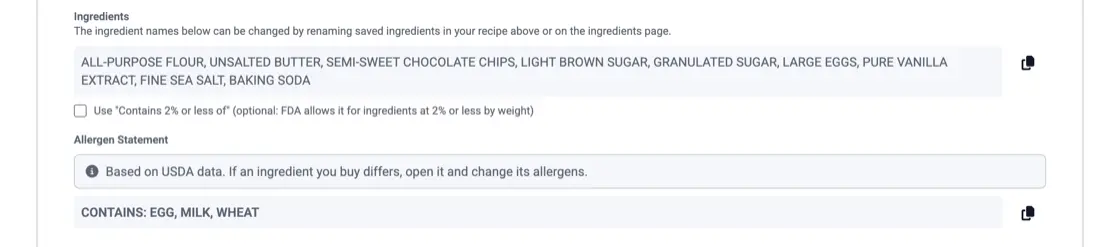
A rub can have fifteen ingredients, and the label lists them from most to least by weight (21 CFR 101.4(a)). KitchenSync writes that list from the recipe, so the order changes when you change an amount. Ingredients at 2% or less can go under a "Contains 2% or less of" line. Copy the finished list with one button. See the ingredient list generator.
Master blends
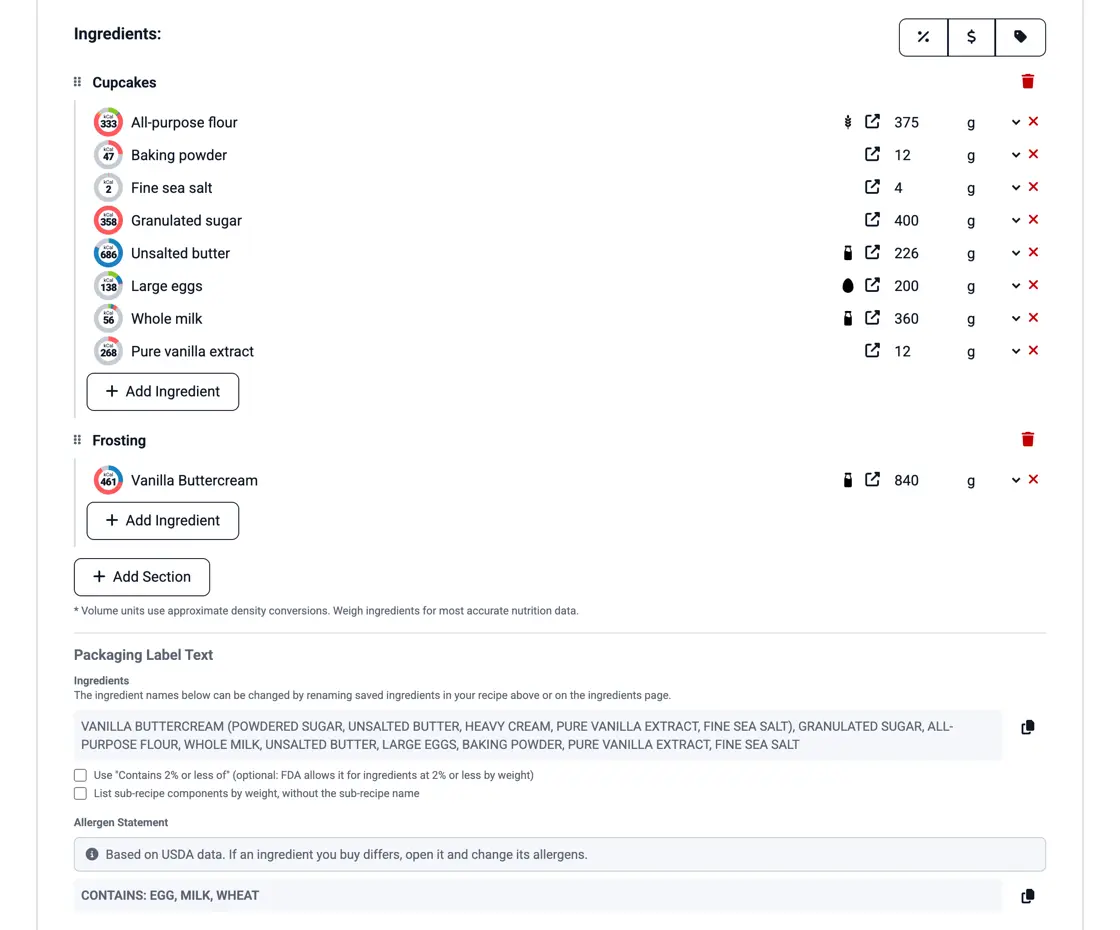
If a house chili base or a salt and pepper mix goes into several products, save it as a recipe and add it to each one. Its cost and nutrition carry through. On the ingredient list the master blend appears by name with its components in parentheses, or its components are listed by weight among the others, the two forms in 21 CFR 101.4(b)(2). See recipes inside recipes.
Spice prices
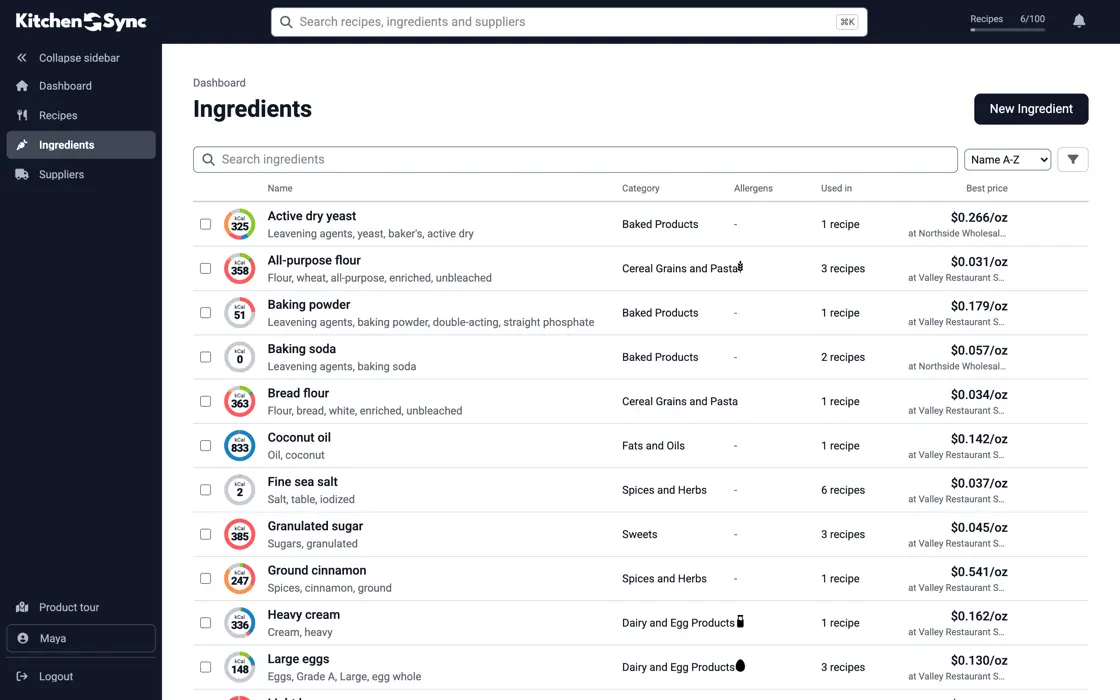
Black pepper, paprika, cumin and saffron prices change with each crop, and the same spice can come from an importer, a restaurant supplier and a co-op. Record each price against the ingredient. KitchenSync uses the lowest unit price to cost the blend and shows the batch cost and the cost per ounce, pound, gram or kilogram. See ingredient pricing and recipe costing.
Jars and pouches
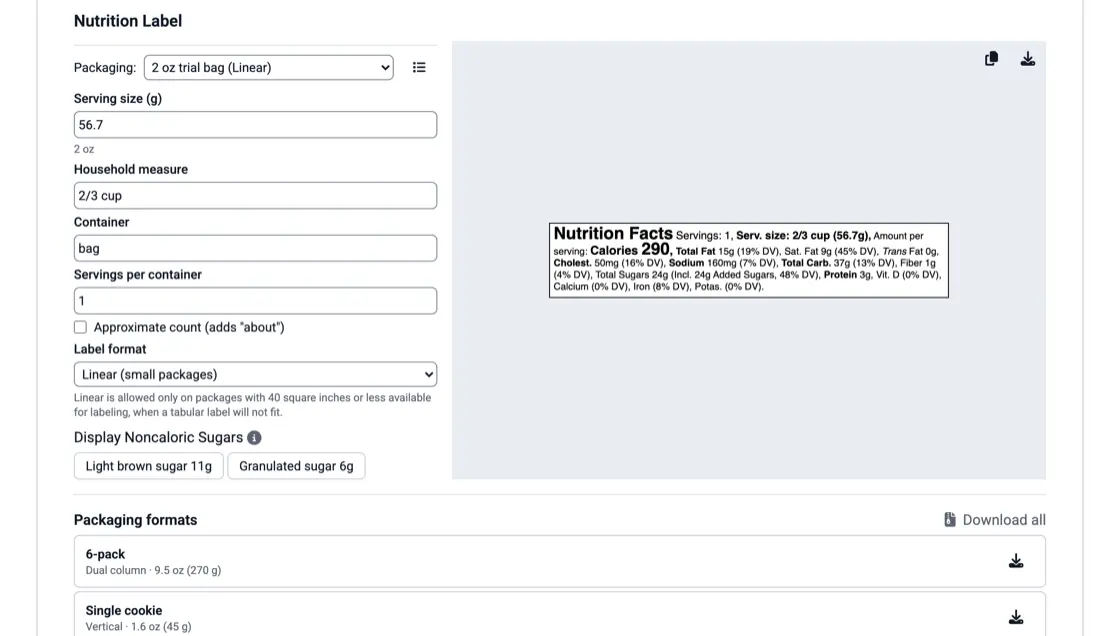
The same rub may sell in a 2 oz jar, an 8 oz pouch and a 5 lb foodservice bag. Save each as a packaging format with its net weight, a serving size such as 1/4 tsp with its weight in grams, and a label format. A narrow jar may qualify for the linear format. Export the labels one at a time or all together. See the nutrition label generator.
Allergens
Single spices rarely carry a major allergen, but blends do. Sesame seed is one of the nine. Ranch and cheese seasonings contain milk, soy sauce powder contains soy and often wheat, and some purchased bases use wheat flour as a carrier. Mustard is not among the nine major allergens in U.S. law (FD&C Act section 201(qq)). KitchenSync detects the nine on each ingredient, and you can correct any ingredient from its spec sheet. See allergen detection.
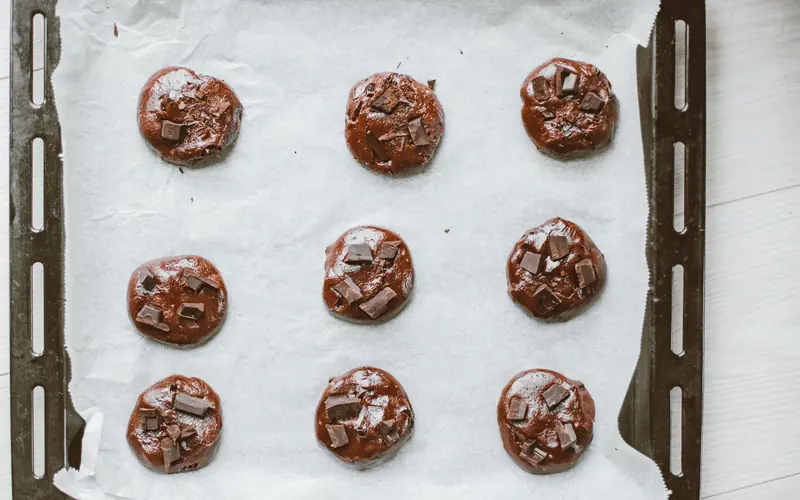
The label elements FDA requires on packaged food, which panel each one goes on, and a front-and-back layout for a bag of cookies.
Find your product's FDA reference amount, turn it into a cup, spoon or piece, and count servings, with cookie, granola and hot sauce examples.

Who must put a Nutrition Facts panel on food and who is exempt under FDA rules, how cottage food laws fit in, and why wholesale buyers may ask anyway.
Foods with insignificant amounts of every required nutrient are exempt under 21 CFR 101.9(j)(4), as long as the label makes no nutrition claims. A blend with salt can have enough sodium to declare. KitchenSync calculates both from the recipe and builds the label.
KitchenSync shows each blend's batch cost and its cost per ounce, pound, gram or kilogram, using the lowest supplier price for every spice. Multiply the cost per ounce by the net weight of the jar.
Yes. Choose New version on the recipe and change the salt. The original stays as the primary version, and the trial has its own nutrition, ingredient list and cost.
Enter a blend by weight and copy its ingredient list and allergen statement. Start free.
Sign Up Free →Need more recipes? See KitchenSync plans and pricing