Write down every purchase with its date, supplier, pack size and price. Convert each one to a price per gram. Re-cost your products on a schedule and whenever a big ingredient moves. When a product's margin slips, you have three levers: raise the price, change the pack size or change the recipe. The last two change your label too.
The post takes those steps in order:
- No price record yet: what a purchase log should record.
- Buying the same ingredient from more than one place: comparing suppliers by price per gram.
- Not sure how often to check: a review schedule.
- A product's margin has already slipped: the three ways to fix it.
- An ingredient just got cheaper: whether to cut your price.
- Curious what moved nationally this year: the national figures.
What should a purchase log record?
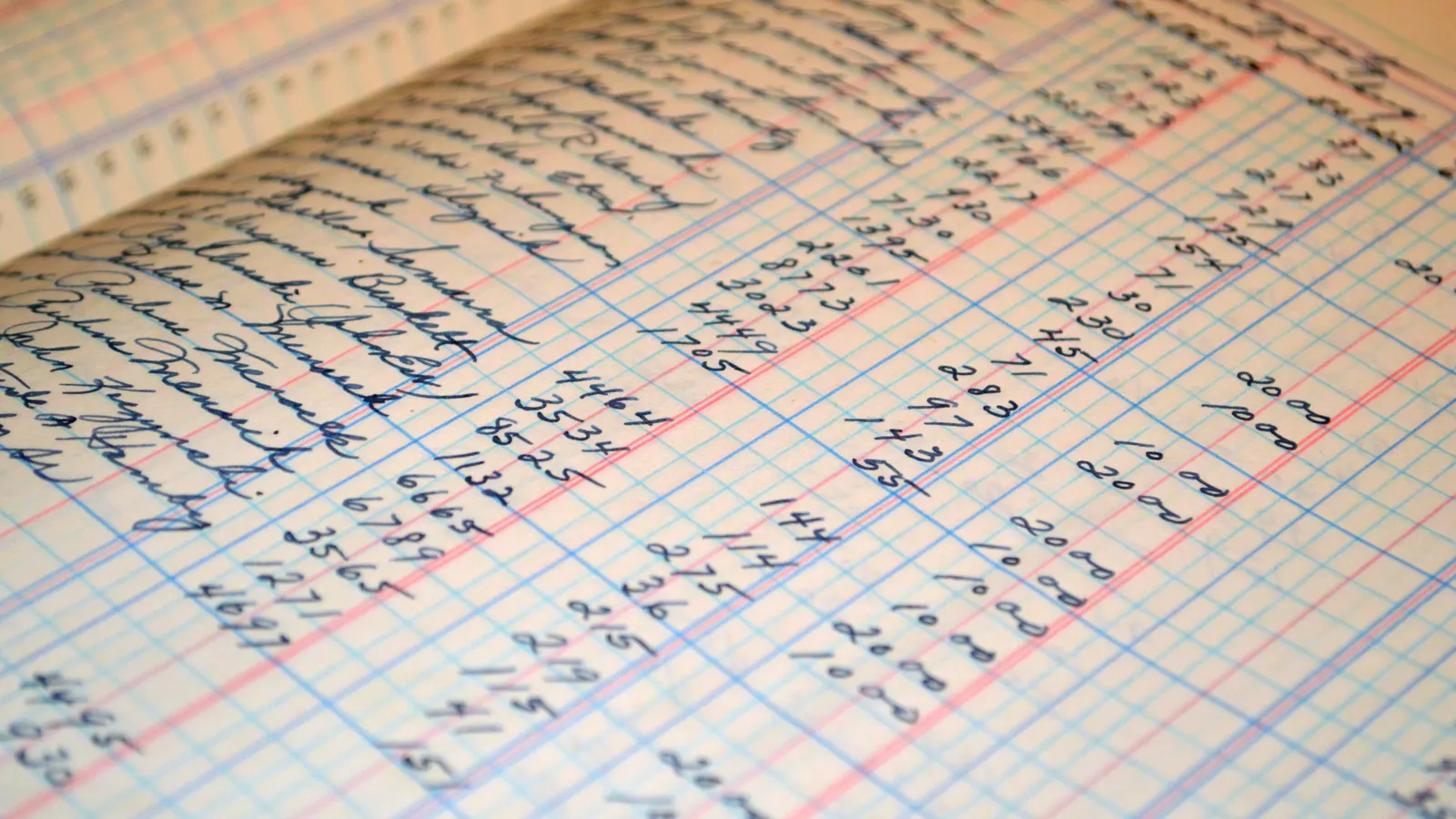
A purchase log needs these columns, one row per purchase:
| Date | Supplier | Item as invoiced | Pack size | Unit | Price paid | Price per gram | Notes |
|---|---|---|---|---|---|---|---|
| 2026-09-12 | Supplier A | Butter, unsalted, 36 x 1 lb | 36 | lb | $138.00 | $0.00845 | |
| 2026-10-10 | Supplier A | Butter, unsalted, 36 x 1 lb | 36 | lb | $151.80 | $0.00930 | Rep said new price list in Oct |
(Example rows.) Add a new row for every purchase instead of overwriting the old one. The rows are your price history. Note anything that changes the comparison: a sale price, a different brand, a delivery fee you want to count.
Compare suppliers by price per gram
Price per gram is the package price divided by its weight in grams. It puts a case, a block and a single pound on the same scale. Three example butter prices:
| Supplier (example) | Price | Weight | Price per gram |
|---|---|---|---|
| A | $138.00 for a 36 lb case | 16,329 g | $0.00845 |
| B | $4.49 for 1 lb | 453.6 g | $0.00990 |
| C | $205.00 for a 55 lb block | 24,948 g | $0.00822 |
A recipe using 1,360 g of butter costs $11.49 with A, $13.46 with B and $11.18 with C. The 55 lb block is cheapest per gram. It is only the best buy if you'll use 55 lb before it goes off, have the cold storage, and can cut and weigh it without waste. Storage, shelf life and order minimums settle it from there.
KitchenSync is nutrition label and recipe costing software for small food businesses. Each ingredient can carry prices from several suppliers, stored as a price per gram, and each recipe is costed from the lowest available price per gram. If you're re-costing a line of baked goods, sauces or snacks, you can set up your ingredients and suppliers in KitchenSync. The recipe costing page explains the rest.
How often should you review prices?
Pick a schedule you'll keep. One example:
- Update the price for your two or three most expensive ingredients every time an invoice comes in. Often a few ingredients carry most of the cost, so find out which ones they are in each product.
- Re-cost every product once a month, or once a quarter if your prices rarely change.
- Re-cost immediately when an ingredient's price per gram moves by more than a set amount. The threshold (say 5%) is your call; pick one and write it down.
The re-costing itself is the arithmetic in how to price baked goods: ingredient cost per unit from price per gram and real yield, then packaging, labor and overhead.
What can you do when a product's margin slips?
Take a shortbread batch of 48 cookies, sold in packs of six (eight packs per batch) at $9.00. The batch uses 1,360 g butter, 1,700 g flour, 680 g sugar and 15 g salt. Example prices:
| Ingredient | Price (example) | Price per gram | Used | Cost |
|---|---|---|---|---|
| Butter (Supplier A) | $138.00 for 36 lb | $0.00845 | 1,360 g | $11.49 |
| Flour | $27.00 for 50 lb | $0.00119 | 1,700 g | $2.02 |
| Sugar | $45.00 for 50 lb | $0.00198 | 680 g | $1.35 |
| Salt | $1.50 for 26 oz | $0.00204 | 15 g | $0.03 |
| Batch | $14.90 |
The rows add to $14.89 because each is rounded; the unrounded total is $14.90, and the figures below are worked from unrounded costs. That's $1.86 per pack, or 20.7% of the $9.00 price.
Now butter goes up 20%, to $0.01014 per gram. The batch costs $17.20, and a pack $2.15, which is 29 cents more. At $9.00, ingredients are now 23.9% of the price.
Raise the price
To keep the same dollars per pack, raise the price by the 29 cents to $9.29. Packaging, labor and overhead didn't change, so that covers it. To restore the 20.7% ingredient share instead, you'd need $2.15 ÷ 0.207 = $10.39. That second approach builds a bigger buffer, and it's a much bigger jump for customers. A round number between the two, like $9.50, is the other option. If you sell wholesale, give the shop notice before the new price takes effect.
Change the pack size
Five cookies instead of six costs $1.79 a pack in ingredients at the new butter price, below where it started, but only if every cookie ends up in a pack. A 48-cookie batch makes nine packs of five with three cookies left over. If those three go out as samples, the $17.20 batch is spread over nine packs, $1.91 each. Changing the batch to 50 or 45 cookies makes it divide evenly. A new pack size also means a new label. The net quantity on the front of the package has to match what's inside (FDA's net quantity rule), and servings per container on the Nutrition Facts panel changes with it. Customers who buy the product regularly will notice, so decide how you'll tell them.
Change the recipe
Replacing some butter with a cheaper fat changes the taste and texture. It also changes the label: ingredients are listed from most to least by weight (FDA's ingredient list rule), so the order may shift, the Nutrition Facts values change, and a substitute can bring a new allergen. If the product is called or sold as butter shortbread, replacing part of the butter can make that name misleading. Test it, keep the old version for comparison (see managing recipe versions), and redo the label before the new batch ships. Making a Nutrition Facts label without a lab covers that step.
Should you cut your price when an ingredient gets cheaper?
Eggs and butter both cost less in August 2026 than a year earlier (national figures below). A falling price doesn't oblige you to cut yours. If a product's margin was squeezed during the rise, a drop is the time to get it back to where it should be.
How much did ingredient prices change from August 2025 to August 2026?
National numbers won't tell you what you'll pay next month, but they show which ingredients have been moving, and in which direction. Grocery (food-at-home) prices were 2.2% higher in August 2026 than a year earlier, according to USDA's Economic Research Service (more below). Some items rose faster than that. These are examples of national average retail prices from the Bureau of Labor Statistics that rose over the same twelve months, using BLS data through August 2026:
| Item (BLS average price series) | Aug 2025 | Aug 2026 | Change |
|---|---|---|---|
| Strawberries, dry pint, per 12 oz | $2.41 | $2.58 | +7.1% |
| Spaghetti and macaroni, per lb | $1.294 | $1.374 | +6.2% |
| Beans, dried, any type, per lb | $1.547 | $1.630 | +5.4% |
| Rice, white, long grain, uncooked, per lb | $1.059 | $1.111 | +4.9% |
| Coffee, 100% ground roast, per lb | $8.87 | $9.30 | +4.8% |
| Milk, fresh, whole, per gallon | $4.17 | $4.23 | +1.4% |
Baking staples went the other way over the same months. In the same BLS series, large grade A eggs fell from $3.59 to $2.27 a dozen (−37%) and stick butter from $4.83 to $4.02 a pound (−17%). All-purpose white flour slipped from $0.557 to $0.548 a pound and white sugar from $1.040 to $1.024, both about 2% lower. The same egg series stood at $6.23 a dozen in March 2025.
ERS, in its September 2026 Food Price Outlook, which uses data through August 2026, reports:
- Food prices overall, including restaurant meals, were 2.7% higher than a year earlier.
- The BLS Consumer Price Index for eggs, as ERS reports it, was 23.0% lower than a year earlier. The index tracks a wider mix of egg purchases than the single average price above, which is why the two numbers differ.
- Sugar and sweets prices were 6.1% higher, with the increase coming mainly from candy and chewing gum, a category ERS says includes most types of chocolate candy. Plain white sugar, above, barely moved.
- Farm-level wheat prices were 35.1% higher than a year earlier, while the retail flour price above was flat.
- ERS forecasts all food prices to rise 2.9% in 2026. It expects egg prices to fall 29.4% and sugar and sweets prices to rise 6.6%, and it expects fats and oils prices to come in lower than in 2025.
Ingredients move independently, so an overall food inflation figure says little about your product. A big move at the farm doesn't always show up on the shelf, at least not right away. And retail averages aren't what a producer buying 50 lb bags pays. Your own invoices are the only numbers that tell you your cost.
What should you ask your suppliers?
Ask your rep for advance notice of price changes and when the next price list is due. Ask whether they'll hold a price for a set period if you commit to a volume, where the quantity breaks are, and what the delivery minimum is. For your most expensive ingredients, keep a second supplier priced and approved so a shortage or a jump at one doesn't stop production.
The labeling points above are general information about federal rules, not legal advice. State rules and the details of your product can change the answer, so check with your state agriculture or health department if you're unsure.
Sources
- Food Price Outlook, Summary Findings (September 2026, data through August 2026), USDA Economic Research Service. This page is replaced each month; the September 2026 release is preserved in an Internet Archive copy captured 25 September 2026.
- Average price data: Strawberries, dry pint, per 12 oz., U.S. city average (APU0000711415), U.S. Bureau of Labor Statistics
- Average price data: Spaghetti and macaroni, per lb., U.S. city average (APU0000701322), U.S. Bureau of Labor Statistics
- Average price data: Beans, dried, any type, all sizes, per lb., U.S. city average (APU0000714233), U.S. Bureau of Labor Statistics
- Average price data: Rice, white, long grain, uncooked, per lb., U.S. city average (APU0000701312), U.S. Bureau of Labor Statistics
- Average price data: Coffee, 100%, ground roast, all sizes, per lb., U.S. city average (APU0000717311), U.S. Bureau of Labor Statistics
- Average price data: Milk, fresh, whole, fortified, per gal., U.S. city average (APU0000709112), U.S. Bureau of Labor Statistics
- Average price data: Eggs, grade A, large, per doz., U.S. city average (APU0000708111), U.S. Bureau of Labor Statistics
- Average price data: Butter, stick, per lb., U.S. city average (APU0000FS1101), U.S. Bureau of Labor Statistics
- Average price data: Flour, white, all purpose, per lb., U.S. city average (APU0000701111), U.S. Bureau of Labor Statistics
- Average price data: Sugar, white, all sizes, per lb., U.S. city average (APU0000715211), U.S. Bureau of Labor Statistics
- 21 CFR 101.4, Food; designation of ingredients, Electronic Code of Federal Regulations
- 21 CFR 101.7, Declaration of net quantity of contents, Electronic Code of Federal Regulations